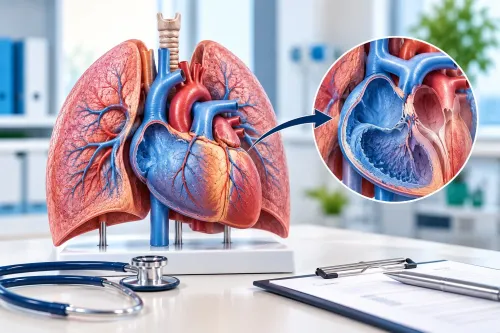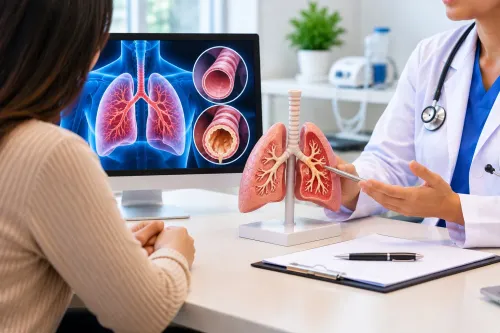
The right treatment depends on whether you have a short-lived viral illness, an underlying airway condition, or a more serious infection. By checking symptom duration, warning signs, medication risks and exposure triggers, you can decide what to manage at home, what needs same-day assessment and what requires emergency care.
Key takeaways
- Acute bronchitis usually needs symptom relief, not routine antibiotics.
- A cough lasting two to three weeks can occur after fever improves.
- Seek urgent care for severe breathlessness, blue lips, confusion, or chest pain.
- Reduce smoke, dust, indoor air pollution, and other irritants during recovery.
How should you choose treatment for acute versus chronic bronchitis?
Acute bronchitis usually follows a viral infection, so acute bronchitis treatment focuses on recovery and symptom relief rather than automatically prescribing antibiotics. Fever can improve while the cough continues for about 2–3 weeks; this bronchitis cough duration is expected, and a persistent cough alone does not prove that treatment has failed.
| Pattern | What it suggests | Next step |
|---|---|---|
| Acute | One short illness, usually viral, with cough lasting about 2–3 weeks | Supportive care and review if symptoms worsen or fail to improve |
| Chronic | Productive cough on most days for at least 3 months in each of 2 successive years | Chronic bronchitis treatment requires assessment for COPD, smoking and biomass-smoke exposure, followed by spirometry after the acute illness settles |
Repeated “bronchitis” episodes need a different question: is asthma, COPD or another airway disorder being missed? Cough between infections, night-time wheeze and breathlessness on exertion warrant objective testing rather than repeated empirical antibiotics or steroid courses.
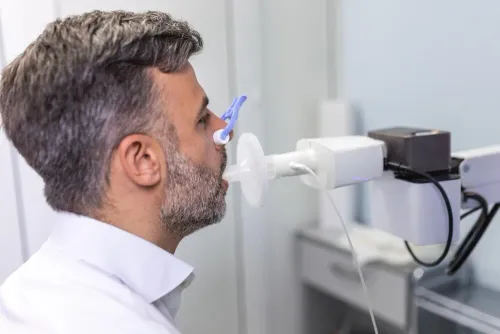
For COPD assessment, Pune patients should arrange spirometry once the acute illness has settled, because testing during infection can misrepresent baseline airflow.
Stop and seek clinical review if the pattern includes persistent symptoms between infections, regular sputum production or progressive exercise limitation. Treating each flare without identifying smoking, biomass smoke, asthma or COPD can delay the treatment that prevents further episodes.
Which medicines and home measures actually help?
Rest, adequate fluids, avoiding tobacco smoke and humidified air from a clean humidifier usually do more for uncomplicated acute bronchitis than prescription medicines. Honey for cough can help adults and children over 1 year; never give honey to an infant under 12 months because of botulism risk.
Use paracetamol only when suitable, and follow the label.
| Option | What it means | When it applies |
|---|---|---|
| Antibiotics for bronchitis | Usually little or no benefit; risks include diarrhoea, allergy and resistance | Not for uncomplicated illness, even with yellow green sputum; consider them when pneumonia, pertussis or another bacterial complication is suspected |
| Cough medicine | Limited benefit; codeine can cause sedation, constipation and dependence | Check active ingredients; sedating antihistamines can impair driving, and combination products can duplicate paracetamol |
| Salbutamol | Not routine; may cause tremor or palpitations | Consider only with wheeze, bronchospasm or demonstrable airflow obstruction |
| Steroids | Not routine for simple acute bronchitis | Use only when asthma or another airway disease provides a clear indication |
Cough medicine safety matters: do not combine several cold remedies without checking their active ingredients. Ask a clinician or pharmacist before any medicine for a child, during pregnancy or breastfeeding, or if you are an older adult or have hypertension, diabetes, ulcers, kidney disease or asthma. These conditions change which ingredients and doses are safe.
How can bronchitis be distinguished from pneumonia and other conditions?
A cough labelled bronchitis needs a different diagnosis when the illness pattern or examination suggests pneumonia, an airway disease, tuberculosis or a non-lung cause. Uncomplicated acute bronchitis does not routinely need a chest X-ray.
| Condition | Pattern or finding | What to do |
|---|---|---|
| Acute bronchitis | Cough after a viral illness, without focal chest signs or serious deterioration | Supportive care; no routine X-ray |
| Pneumonia | High or persistent fever, fast heart rate, focal crackles, marked breathlessness, low oxygen saturation, confusion or frailty | Same-day examination and often a chest X-ray |
| COVID-19 or influenza | Outbreak exposure, sudden fever, body aches or pronounced systemic symptoms | Consider targeted testing and antiviral eligibility |
| Asthma or COPD | Recurrent wheeze, variable symptoms, night or exertional breathlessness, or known airflow limitation | Assess airflow; compare bronchitis versus asthma rather than repeating antibiotics |
| Bronchiectasis | Recurrent chest infections with persistent, large-volume sputum | Chest assessment and imaging |
| Tuberculosis | Weight loss, night sweats, prolonged fever, coughing blood or close contact | Targeted TB testing, not successive bronchitis medicines |
In Pune, a tuberculosis cough should not be attributed automatically to pollution or a seasonal infection. COVID-19 influenza cough symptoms also deserve consideration during compatible outbreaks or systemic illness.
Reflux and upper-airway cough from the nose or throat can mimic lung disease. After recovery, spirometry helps investigate recurrent episodes, cough between infections or exertional breathlessness; a normal acute examination does not justify repeated empirical treatment.
When does bronchitis need emergency or same-day care?
Seek emergency assessment now for bronchitis emergency symptoms that could indicate pneumonia or another serious illness:
- Severe or worsening breathlessness
- Blue lips, confusion or fainting
- Chest pain or coughing blood
- Markedly reduced or falling oxygen saturation; low oxygen saturation bronchitis needs urgent attention
- Inability to keep fluids down or signs of severe dehydration
Do not drive yourself when you are breathless, confused or faint. Ask someone to take you, or call emergency services.
Arrange same-day assessment for persistent fever with cough, worsening breathing, dehydration, rapid deterioration or a cough continuing beyond the expected 2–3-week recovery period. Seek prompt review if symptoms worsen after initial improvement; that pattern deserves reassessment even if you had started to feel better.
A chest X-ray or other tests may be needed when pneumonia is suspected.
Pregnancy, advanced age, a weakened immune system, significant heart disease or significant lung disease lowers the threshold for urgent review. Contact a clinician sooner rather than relying on over-the-counter treatment.
An isolated cough for several days does not prove that treatment has failed, because acute bronchitis can leave a cough for 2–3 weeks. If you are unsure when to see a doctor for bronchitis, choose same-day advice when the cough is worsening, recovery has stalled or any warning sign appears.
Which exposure changes support recovery in Pune?
Smoking and vaping can prolong recovery, so stop both and keep your home and car smoke-free. Repeated exposure can extend a cough and worsen asthma or COPD; smoking and bronchitis recovery do not fit together.
| Exposure | Recovery change | Practical step |
|---|---|---|
| Smoking or vaping | Sustains airway irritation | Stop completely; avoid second-hand smoke |
| Dust-generating work | Keeps inflamed airways irritated | Reduce this work until coughing improves |
| Traffic emissions | Adds particulate exposure | Ventilate from the traffic-facing side and reduce time outdoors during visibly poor air quality |
| Chemicals, fibres or dust | Can trigger prolonged cough or wheeze | Follow workplace controls; use a well-fitting N95 mask when dust exposure is unavoidable |
| Indoor smoke | Re-exposes your airways | Keep rooms smoke-free and improve ventilation |
An N95 mask for dust exposure is protection, not a cure. Repeated exposure can also reveal asthma or COPD rather than simple viral bronchitis.
A respiratory assessment Pune patients can obtain at Dr Kunjir's Brio Clinic can distinguish uncomplicated bronchitis from asthma, COPD or another chest condition, decide whether spirometry or a chest X-ray is justified, and check medication safety during pregnancy, breastfeeding or chronic disease.
Seek that review when the cough pattern, exposure history, risk factors or warning signs no longer fit simple viral recovery.
Related service
Chest Diseases Treatment HEART DISEASES - COR PULMONALE Cor pulmonale is a condition that causes the right side of the heart to fail. View service → |
Frequently asked questions
How should you choose treatment for acute versus chronic bronchitis?
Acute bronchitis usually follows a viral infection and needs rest, fluids, and symptom relief. Chronic bronchitis requires assessment of ongoing airflow symptoms and exposure triggers.
Which medicines and home measures actually help bronchitis?
Use clinician-advised medicines, drink fluids, rest, and avoid smoke and airway irritants. Antibiotics do not routinely treat viral acute bronchitis.
How can bronchitis be distinguished from pneumonia and other conditions?
Pneumonia needs medical assessment when symptoms include worsening fever, breathlessness, chest pain, low oxygen, confusion, or marked weakness. A persistent cough alone does not confirm pneumonia.
When does bronchitis need emergency or same-day care?
Seek emergency care for severe breathing difficulty, blue lips, confusion, or severe chest pain. Arrange same-day assessment for worsening symptoms, coughing blood, or concern about pneumonia.
Which exposure changes support recovery in Pune?
Avoid tobacco smoke, traffic pollution, construction dust, incense, strong fragrances, and poorly ventilated spaces while your airways recover.