Heavy or prolonged bleeding, bleeding between periods, pelvic pressure, pain, infertility or bleeding after menopause can lead to an evaluation for fibroids, endometrial polyps and other conditions. You will learn what happens at each stage, which tests clarify the diagnosis, how treatment choices are made, and what follow-up should check.
Key takeaways
- Seek assessment for bleeding longer than seven days or after menopause.
- Ultrasound and hysteroscopy help distinguish uterine fibroids from polyps.
- Small, symptom-free findings can be monitored with planned reviews.
- Recovery depends on whether treatment uses medicines, hysteroscopy, or fibroid procedures.
Why symptoms lead to a fibroid or polyp evaluation
Heavy or prolonged menstrual bleeding is a common reason to investigate the uterus, especially when you soak a pad or tampon hourly, pass large clots, or bleed for more than seven days. Bleeding between periods, pelvic pressure, pelvic pain, difficulty becoming pregnant, and bleeding after menopause also warrant assessment.
Postmenopausal bleeding needs evaluation even after one episode.
The fibroid polyp diagnosis process starts with information that helps separate uterine causes from pregnancy, medication effects, infection, adenomyosis, or other conditions. Your clinician will ask about:
- The date of your last period, cycle pattern, bleeding volume, clots, and pain
- Pregnancy possibility, previous pregnancies, fertility plans, and menopause status
- Pressure symptoms, urinary or bowel changes, pain during sex, and infertility
- Medicines such as anticoagulants, hormonal contraception, and tamoxifen
- Previous scans, procedures, anaemia, fibroids, polyps, or cancer
A pregnancy test is relevant when bleeding or pelvic pain occurs in someone who could be pregnant. A full blood count checks for anaemia caused by blood loss, while a pelvic examination may assess the cervix, uterus, and tenderness.
If a uterine cause is suspected, clinicians commonly arrange a transvaginal ultrasound. It can show whether a fibroid sits in the uterine wall or projects into the cavity, but a small cavity polyp or fibroid may need a more focused test.
How scans and examinations identify the problem
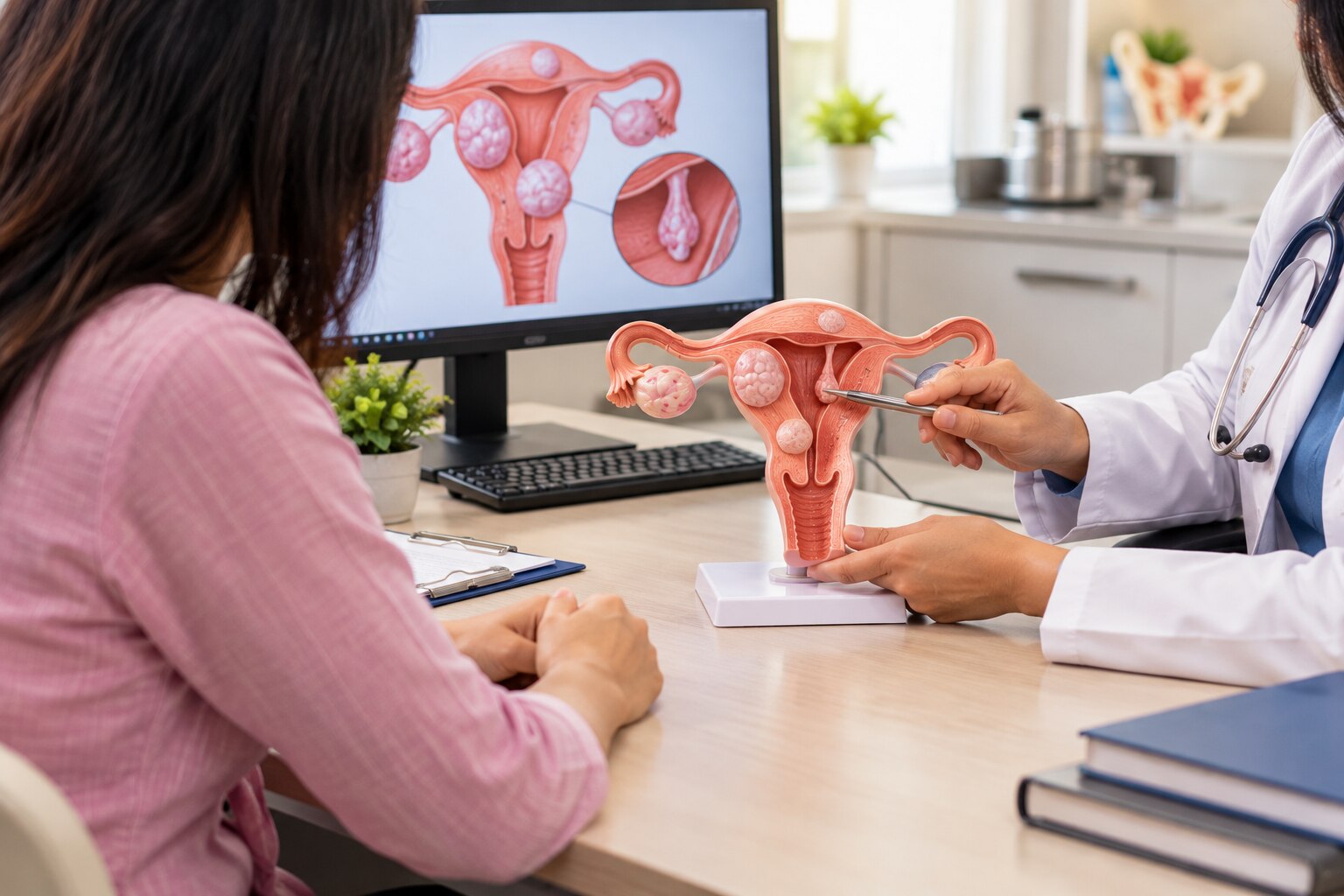
A fibroid and an endometrial polyp can both cause heavy bleeding, but location separates them. A fibroid is a benign growth of uterine muscle: it may sit beneath the lining (submucosal), within the uterine wall (intramural), or on the outer surface (subserosal). A polyp is an overgrowth attached to the lining inside the uterine cavity.
The fibroid polyp diagnosis process usually follows these steps:
1. The clinician reviews menstrual timing, bleeding between periods, pain, pressure, medicines, pregnancy possibility and menopause status. A pelvic examination checks the cervix, vagina and uterus when appropriate. A pregnancy test matters when pregnancy could explain bleeding or pain, and a full blood count checks for anaemia.
2. Transvaginal ultrasound is usually the first scan. It can show a fibroid’s size, number and position, while a polyp appears as a focal lesion within the cavity. Ultrasound also looks for adenomyosis, an enlarged uterus and ovarian causes, but a small cavity lesion can remain uncertain.
3. Saline-infusion sonography outlines the cavity with sterile fluid when ultrasound is inconclusive. Hysteroscopy uses a camera through the cervix to see and remove a polyp or submucosal fibroid; send removed tissue for histopathology because appearance alone cannot confirm that it is benign. A blind biopsy can miss a focal lesion.
4. Pelvic MRI maps numerous or deeply embedded fibroids and clarifies anatomy before complex treatment. These findings shape what happens during fibroid and polyp treatment.
When monitoring is reasonable and when treatment is planned
Size alone does not decide whether to observe or treat. A small submucosal fibroid or endometrial polyp can disrupt the uterine cavity, causing heavy bleeding or reducing fertility, while a larger subserosal fibroid may cause few problems.
Observation is reasonable when:
- Bleeding, pain and pressure are absent or manageable.
- The complete blood count shows no anaemia, or treatment has corrected it.
- The lesion does not distort the cavity and remains stable on follow-up imaging.
- Fertility is not being affected and the person prefers to avoid intervention.
Treatment is planned when bleeding disrupts daily life, anaemia persists, pain or pressure limits activity, or a lesion grows or distorts the cavity. A polyp or submucosal fibroid that may explain infertility or repeated miscarriage deserves particular attention, even when it is small.
The fibroid polyp treatment steps then depend on the lesion’s position, uterine anatomy and the person’s goals.
Fertility plans change the choice: someone trying to conceive may favour cavity-preserving removal, while someone who has completed childbearing may consider a wider range of options. Discuss the chance of recurrence and how each treatment affects future pregnancy.
Menopause also changes the threshold. Postmenopausal bleeding requires assessment, and a new, enlarging or symptomatic lesion should not be watched without a clear review plan. A small, symptom-free lesion with reassuring findings may be monitored, with instructions to report bleeding, pain or pressure promptly.
Comparing medicines, hysteroscopy and fibroid procedures
Your fibroid polyp treatment steps depend on the lesion’s location, bleeding severity, anaemia, fertility plans and menopause status. At Dr Kunjir's Brio Clinic, gynaecologist fibroid polyp care can involve choosing symptom control, cavity treatment or a larger procedure rather than using one option for every patient.
| Option | What it involves | Main trade-off |
|---|---|---|
| Medicines | Hormonal medicines reduce bleeding; gonadotrophin-releasing hormone medicines can temporarily shrink fibroids before treatment. | Symptoms and fibroid size usually return after stopping; menopausal-type effects, bone-health concerns and add-back therapy limit longer use. |
| Hysteroscopy | A camera passes through the vagina and cervix to remove a polyp or submucosal fibroid without an abdominal incision. | Ask about outpatient treatment, anaesthesia or a separate procedure; removed tissue needs histopathology. |
| Myomectomy | The surgeon removes fibroids while leaving the uterus in place. | It preserves pregnancy potential, but new fibroids can develop and recovery depends on the surgical route. |
| Uterine artery embolisation | Particles block the fibroid blood supply, reducing bleeding and volume. | Discuss fertility evidence, alternatives and the possibility of further treatment before choosing it. |
| Hysterectomy | The uterus is removed, eliminating uterine fibroids and the ability to carry a pregnancy. | It is major surgery; ovary removal is a separate decision, not an automatic step. |
Medicines can bridge the time before surgery, while hysteroscopy suits a cavity lesion. Myomectomy and embolisation require a fertility-focused discussion; hysterectomy suits those who do not want future pregnancy and need definitive treatment.
Related service
Gynaecologist Fibroids and polyps contain very different types of tissue. Fibroids are made of dense, connective fibrous tissue. View service → |
What recovery and follow-up should include
After hysteroscopy, cramping and light bleeding for a few days are common. Abdominal procedures and uterine artery embolisation involve different recovery demands, so follow the discharge instructions and arrange the planned review. What happens during fibroid and polyp treatment determines what needs checking afterwards.
| Treatment | Early recovery | Meaningful follow-up |
|---|---|---|
| Hysteroscopic polypectomy or fibroid removal | Cramping and light bleeding | Confirm the histopathology result, symptom improvement and whether further treatment is needed |
| Uterine artery embolisation | Pain, fatigue and bleeding can require active symptom control | Review bleeding, fibroid response, medication effects, fertility plans and possible further treatment |
| Myomectomy or hysterectomy | Incision-related pain, restricted activity and wound healing | Check recovery, pathology, bleeding or pressure symptoms and any remaining concerns |
Seek urgent clinical advice for heavy bleeding, severe or worsening pain, fever, foul-smelling discharge, fainting or feeling acutely unwell. These signs can indicate infection, significant bleeding or, rarely, uterine injury.
Meaningful gynaecologist fibroid polyp care also includes a complete blood count when anaemia was present, review of medication adverse effects and a clear plan for repeat imaging or treatment. Symptoms can persist if adenomyosis coexists or a fibroid remains after a cavity procedure.
If you are seeking pregnancy, ask specifically how embolisation, myomectomy or further surgery affects fertility.
Frequently asked questions
Why do symptoms lead to a fibroid or polyp evaluation?
Heavy or prolonged bleeding, bleeding between periods, pelvic pressure, pelvic pain, difficulty becoming pregnant, and bleeding after menopause can require evaluation for fibroids or polyps.
How are fibroids and polyps identified?
A gynaecological examination, pelvic ultrasound, and sometimes hysteroscopy help locate and assess changes inside or around the uterus.
When is monitoring reasonable instead of immediate treatment?
Monitoring can be reasonable when a finding causes no symptoms and does not create concerning changes. Treatment is planned when bleeding, pain, pressure, fertility problems, growth, or postmenopausal bleeding requires action.
What does follow-up after fibroid or polyp treatment include?
Follow-up checks recovery, bleeding, pain, infection symptoms, and whether symptoms have improved. Your clinician may review pathology results and arrange repeat imaging or examination.
Keywords