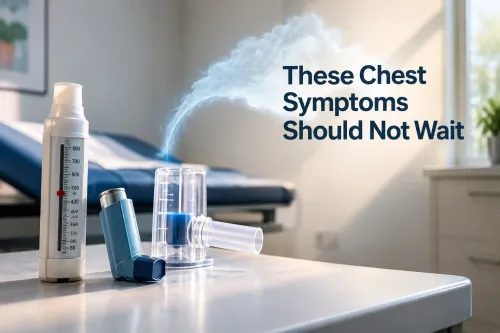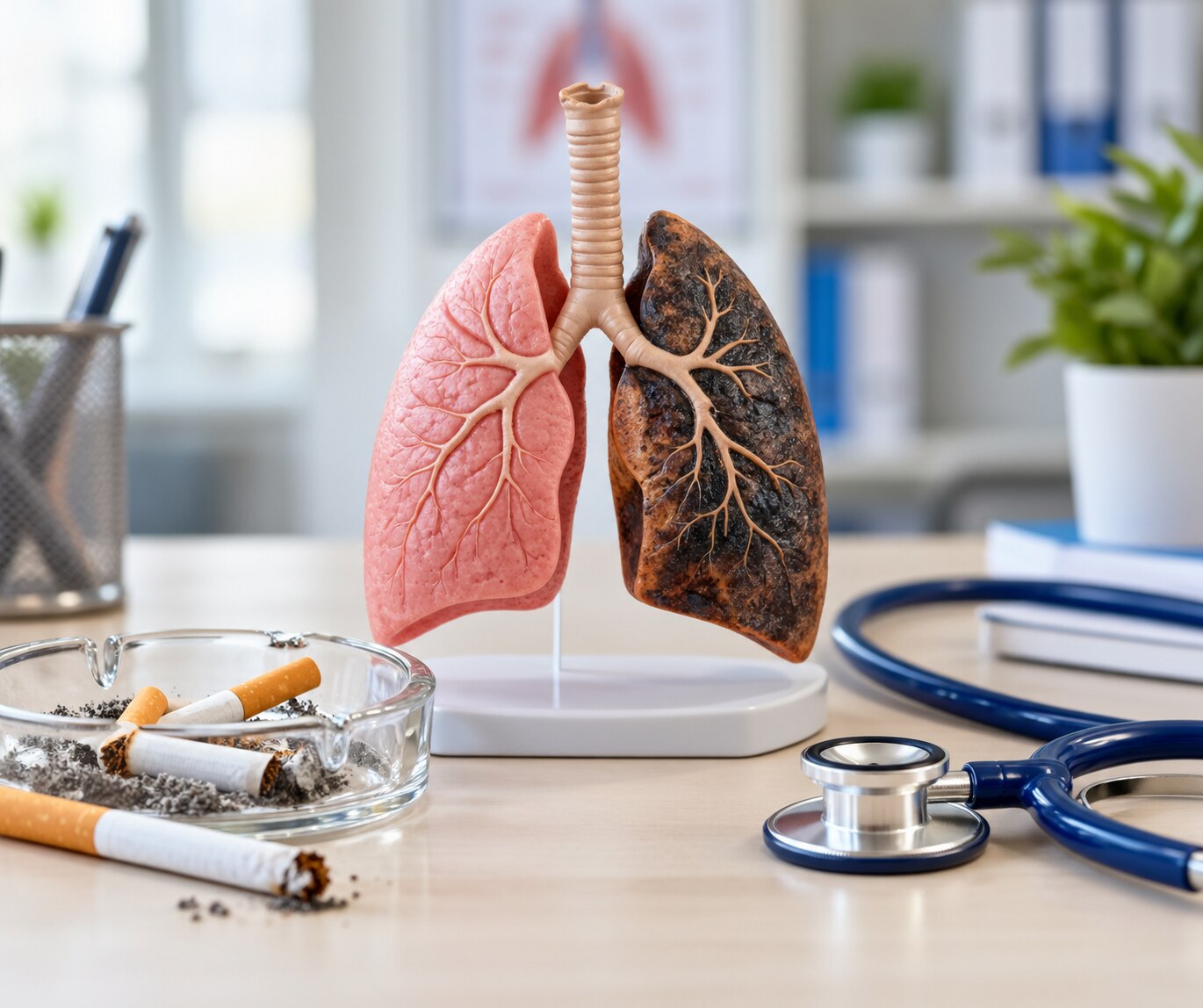
A cough that follows years of smoking deserves more than repeated cough syrup, especially when stairs or ordinary walking leave you breathless. You will learn how smoke damages the lungs, which warning signs require urgent care, what a pulmonologist tests, and how to choose appropriate smoking cough treatment in Pune.
Key takeaways
- A smoker’s cough does not by itself confirm COPD.
- Seek emergency care for severe breathlessness, chest pain, blue lips, or confusion.
- Spirometry measures airflow; a pulse oximeter measures blood oxygen saturation.
- Record smoking history, symptoms, triggers, medicines, and previous test results.
How smoking-related cough differs from a viral cough or another lung problem
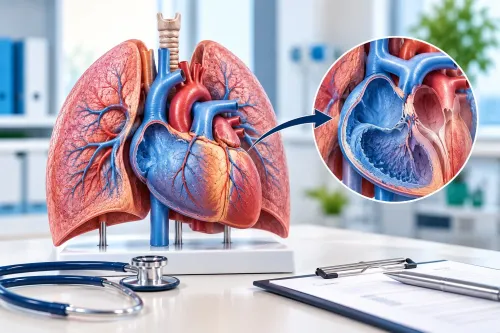
Tobacco smoke damages the airway lining, paralyses the cilia that clear mucus, increases inflammation and narrows the airways. Cumulative exposure can produce a persistent cough and breathlessness during exertion, but a “smoker’s cough” does not establish COPD.
Vaping aerosol can also irritate airways and is not harmless; second-hand smoke exposes non-smokers to particulate matter and toxic chemicals.
| Pattern | Clues | What it suggests |
|---|---|---|
| Viral cough or bronchitis | Follows a cold and improves over several days to a few weeks | A prolonged or worsening cough needs review |
| Asthma | Variable wheeze, chest tightness or night symptoms | Airways that narrow intermittently |
| COPD | Persistent exertional breathlessness plus a long smoking or exposure history | Needs lung assessment and spirometry |
| Reflux | Dry cough, throat irritation or hoarseness | Stomach acid reaching the throat |
| Post-nasal drip | Repeated throat clearing with nasal blockage or discharge | An upper-airway cause |
| Tuberculosis | Prolonged cough with fever, night sweats, weight loss or blood | Prompt assessment is needed |
| Pneumonia | Acute illness with fever, chest pain or marked deterioration | Urgent medical evaluation |
A cough lasting more than three weeks, recurring infections, unexplained weight loss or persistent hoarseness deserves a pulmonologist’s assessment. Searching for cough specialist smoking breathing difficulty for hadapsar should lead to a lung evaluation, not a cough suppressant alone. A clinician can distinguish irritation from asthma, COPD, tuberculosis, pneumonia, reflux or post-nasal drip.
When a smoker needs emergency care or a chest physician appointment
Seek emergency care immediately for severe breathlessness at rest, rapidly worsening breathing, blue or grey lips, new confusion, fainting, severe chest pain, coughing blood, or inability to speak in full sentences. Do not wait for a routine appointment when these signs appear.
- Severe breathlessness at rest
- Rapidly worsening breathing
- Blue or grey lips
- New confusion
- Fainting
- Severe chest pain
- Coughing blood
- Inability to speak in full sentences
For non-emergency symptoms, book a cough and breathing difficulty doctor: a pulmonologist, also called a chest physician or respiratory physician. Arrange the appointment when your cough lasts more than three weeks, keeps returning, or causes breathlessness during exertion. An adult cough lasting more than eight weeks is chronic and needs assessment, not repeated self-treatment.
Arrange a review for:
- Recurring chest infections
- Unexplained weight loss
- Night sweats
- Persistent hoarseness
- Wheeze
- Fever
- Reduced exercise tolerance
A cough specialist near Hadapsar should assess COPD, asthma, tuberculosis, pneumonia, reflux-related cough and heart-related causes, rather than only supplying cough medicine. Antibiotics are not the default treatment for a smoker’s cough or every COPD flare; a clinician chooses them when bacterial infection or relevant exacerbation features support their use.
What a chest physician checks, including spirometry and oxygen levels
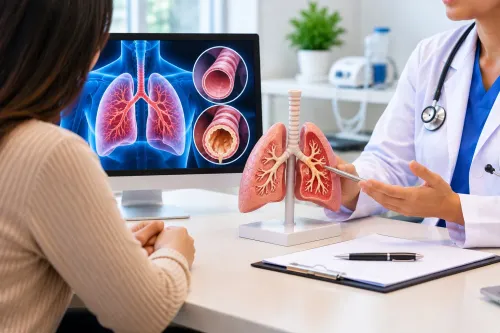
A proper consultation combines your history, examination and targeted tests; no single result explains every smoker’s cough. The clinician asks about exposure, symptom pattern and breathlessness before deciding what to investigate.
Pulse oximetry estimates oxygen saturation through a finger probe. The respiratory examination checks breathing rate, wheeze, crackles and work of breathing, including whether your neck or chest muscles are working unusually hard.
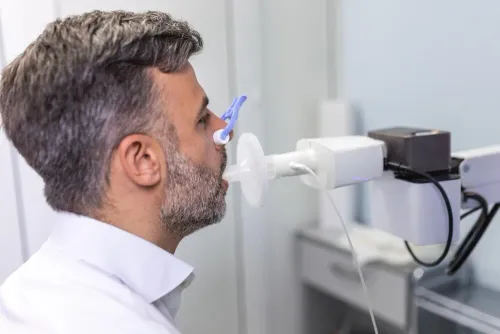
Spirometry measures airflow. You breathe into a sensor, take a full breath, then blow out as hard and as long as possible. FEV1 is the forced expiratory volume in the first second. FVC is the forced vital capacity: the total air forcibly exhaled after a full inhalation.
COPD requires compatible symptoms or exposure history plus a post-bronchodilator FEV1/FVC ratio below 0.70. A normal result does not automatically explain cough; reflux, post-nasal drip, intermittent asthma, infection or another condition can remain.
| Test | What it assesses | When it is selected |
|---|---|---|
| Chest X-ray | Infection, visible lung changes or other concerns | Initial assessment or an abnormal examination |
| Blood tests or sputum examination | Inflammation, infection or sampled airway material | When symptoms and findings justify them |
| CT or echocardiography | Detailed lung structure or possible heart-related causes | When initial results do not explain symptoms |
A search for “chest physician for cough hadapsar” should lead you to a clinician who can perform or arrange spirometry and interpret it alongside your history, not read one test in isolation.
What to record before your cough and breathing consultation
Bring a short symptom and exposure record; it helps the clinician identify patterns faster than trying to remember them in the room.
1. Record when the cough began, whether it is dry or productive, sputum colour, any blood, wheezing, fever, night symptoms, chest pain, and breathlessness at rest or during exertion. Note sleep disruption and changes in weight or voice.
2. Write down cigarettes or bidis smoked each day, years smoked, vaping frequency and second-hand smoke exposure. Calculate pack-years by multiplying packs per day by years smoked: one pack daily for 10 years equals 10 pack-years. This measures cumulative exposure; it does not diagnose COPD or determine your individual cancer risk.
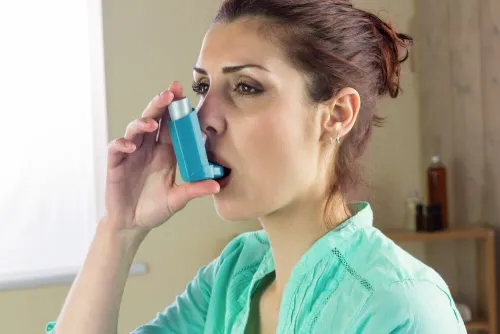
3. Add workplace dust, fumes or chemicals, biomass-smoke exposure, previous tuberculosis or asthma, recurring chest infections, current medicines and every inhaler you have used. Bring the inhalers or clear photographs of their labels so the clinician can check the device and dose.
4. Record whether symptoms improve away from work, after weekends, or when you avoid meals before bed. Improvement away from work can point to occupational exposure, while symptoms after meals or at night can support reflux-related cough. These details help separate airway disease from infection, reflux, upper-airway cough syndrome and workplace causes.
How quitting smoking changes treatment and the choice of clinic near Hadapsar
Effective smoking cough treatment in Pune should address tobacco dependence, not merely suppress coughing while smoke exposure continues. Set a quit date, make a plan for cravings and withdrawal, and involve family or a counsellor. Discuss nicotine replacement with a clinician, including patches, gum or lozenges.
A clinician can assess whether prescription varenicline or bupropion suits your medical history and current medicines. Do not start either drug without that review.
Stopping smoking reduces ongoing airway injury and is the most important step for slowing COPD progression. Persistent cough or breathlessness still needs investigation after quitting. Avoid routine antibiotics unless examination or testing supports a bacterial infection or another indication.
| Clinic feature | Ask before booking | Why it matters |
|---|---|---|
| Respiratory specialist | Is a pulmonologist, chest physician or respiratory physician available? | This specialist assesses COPD, asthma, tuberculosis and other lung causes. |
| Testing | Are spirometry and pulse oximetry offered or arranged? | Results help assess airflow and oxygen levels instead of treating symptoms blindly. |
| Urgent care | How are rapidly worsening symptoms handled? | You need clear instructions rather than a delayed routine appointment. |
Dr Kunjir's Brio Clinic in Pune is one local outpatient option for discussing smoking-related cough, breathing difficulty, cessation planning and appropriate respiratory testing.
Seek emergency care for severe breathlessness at rest, blue or grey lips, new confusion, severe chest pain, coughing blood or inability to speak in full sentences. Do not wait for a clinic visit.
Related services
CHEST DISEASES TREATMENT COUGH, DIFFICULTY IN BREATHING If you are short of breath with a cough and/or fever, you may have a chest infection or pneumonia. View service → |
COUGH, DIFFICULTY IN BREATHING CHEST DISEASES TREATMENT PROVIDED FOR Bronchoscopic Lung Volume Reduction – a non-surgical procedure to improve breathing in people with emphysema and COPD. ... View service → |
Frequently asked questions
How does smoking-related cough differ from a viral cough?
Smoking-related cough often persists with mucus or exertional breathlessness, while a viral cough commonly follows an infection and improves as it resolves. A cough alone cannot confirm COPD or another lung disease.
When should a smoker seek emergency care?
Seek emergency care for severe or rapidly worsening breathlessness, chest pain, blue lips, confusion, fainting, or inability to speak normally because of breathlessness.
What does a chest physician check for smoking-related breathing difficulty?
The assessment can include your smoking exposure, symptoms, chest examination, oxygen saturation measured by pulse oximeter, and spirometry to measure airflow.
What should I record before a cough and breathing consultation?
Record when the cough began, mucus colour and amount, breathlessness triggers, wheezing, fever, smoking history, current medicines, previous lung conditions, and available test reports.
How does quitting smoking affect treatment?
Quitting removes ongoing smoke exposure and helps the clinician choose treatment based on your symptoms, lung function, oxygen level, and confirmed diagnosis rather than assuming every cough is a smoker’s cough.
Related service
Chest Diseases Treatment HEART DISEASES - COR PULMONALE Cor pulmonale is a condition that causes the right side of the heart to fail. View service → |
Keywords